
In our recent white paper, Arthur Holm explores how technology is transforming the modern workplace and redefining the meeting experience. We examine the evolution of collaborative environments and the growing role of intelligent technologies in enabling more connected, efficient, and productive organizations.
This white paper builds on those ideas by examining one of the most profound forces shaping the future of work: artificial intelligence.
For decades, technological progress has been measured by its ability to reduce human effort. From industrial automation to enterprise software, each innovation promised greater efficiency by minimizing the need for human intervention. Artificial intelligence appears to be the culmination of that trajectory. It writes reports, summarizes meetings, analyzes markets, drafts presentations, and increasingly supports decision-making itself.
Yet there is a paradox emerging at the heart of the AI economy.
The more capable artificial intelligence becomes, the more valuable distinctly human interaction becomes.
This is not simply a philosophical observation. It is the conclusion reached—implicitly or explicitly—by economists, workplace researchers, architects and business strategists who are examining the future of work from different perspectives. While AI is rapidly lowering the cost of producing information, it is simultaneously
increasing the strategic importance of interpretation, judgment, trust and collaboration.
The result is reshaping not only jobs, but also the spaces where organizations make their most important decisions.
In this white Paper we talk about the following topics:
- 1. The New Scarcity Is Human Judgement
- 2. Even AI Companies Are Looking Beyond Engineering
- 3. Why Offices Are Becoming Social Infraestructure
- 4. AI Is Changing the Purpose of Meetings
- 5. The Boardroom as a Strategic Asset
- 6. Invisible Technology Creates Visible Leadership
- 7. The Competitive Advantage No Algorithm Can Replicate
The boardroom is no longer simply where decisions are made.
It is where the distinctly human capabilities that AI cannot reproduce become an organization’s greatest strategic resource.
And that makes the design of those spaces—not just the technology within them—a matter of competitive advantage.
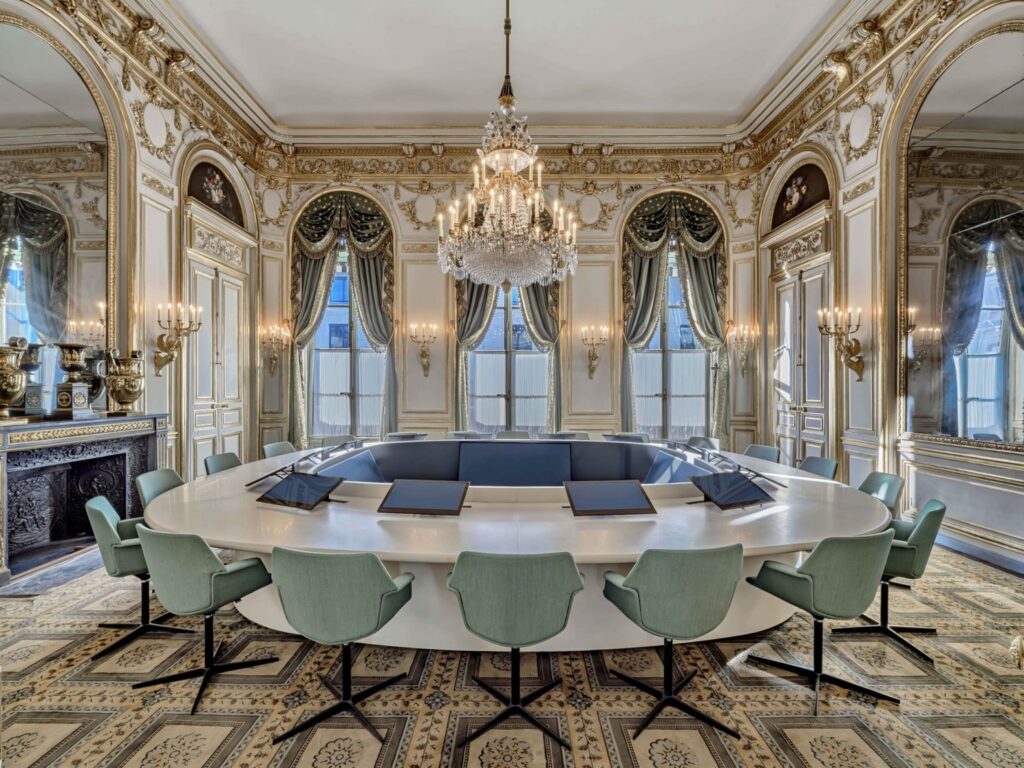
Across the world’s most influential boardrooms—from presidential palaces and national parliaments to global
financial institutions and corporate headquarters—a common design philosophy is emerging. The most sophisticated meeting spaces are not showcasing technology; they are making it disappear. As AI reshapes knowledge work, these environments are being designed around what technology cannot replace: human judgment, strategic dialogue and trust. Arthur Holm’s solutions have become a defining feature of this new generation of executive spaces because they remove friction from the conversation, allowing people—not devices—to remain at the center of decisionmaking.