
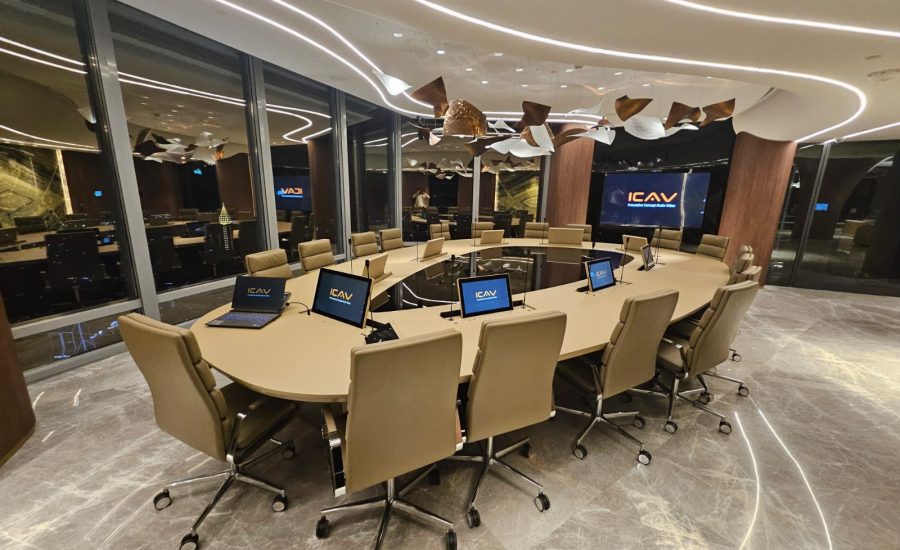
Every important business decision brings together information, experience and different points of view. The quality of the discussion matters—and so does the space where it happens.
A thoughtfully designed boardroom gives people the conditions to listen, question assumptions and evaluate options together. From clear sightlines to intuitive technology, every detail can support a more productive exchange.
Neuroarchitecture offers a useful perspective on this relationship. Drawing on neuroscience, psychology and architecture, it explores how the built environment relates to our attention, emotions and behaviour. Applied to boardroom design, it encourages a practical question: how can the room support the people making the decisions?
Lighting, acoustics, visual comfort and furniture arrangement all deserve consideration. So does something easily overlooked when specifying technology: the ability to see one another.
Bring different perspectives into the same conversation
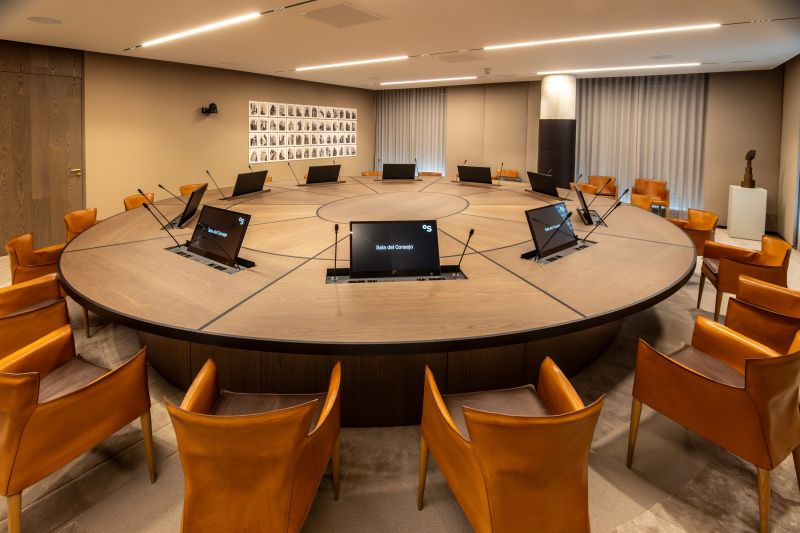
Complex decisions benefit from challenge. A proposal becomes stronger when colleagues can explore its implications, raise concerns and contribute expertise.
A boardroom creates a dedicated setting for that exchange. Being together makes it easier to notice hesitation, ask a follow-up question and clarify what someone means before moving forward.
Eye contact is an important part of this process. Research into natural conversation has linked eye contact with moments of shared attention and greater self-reported engagement. Other experimental work shows how gaze helps signal transitions between speaking and listening. These findings suggest why preserving visual connection deserves attention in boardroom design.
Around the table, a glance can invite a colleague to contribute. A facial expression or gesture can prompt the speaker to pause and check understanding. These nonverbal exchanges give a discussion texture and help participants respond to one another as the conversation develops.
They also create opportunities to explore uncertainty before it becomes apparent agreement. If someone appears hesitant, a simple question—“Is there a concern we should discuss?”—can bring another perspective into the room.
Nonverbal cues need interpretation and clarification: a nod does not necessarily mean agreement, and looking away does not necessarily mean disengagement. Eye contact also varies with culture, neurodiversity and personal comfort. Good design makes visual connection available while supporting different ways of participating.
Give everyone a clear view of the evidence—and one another
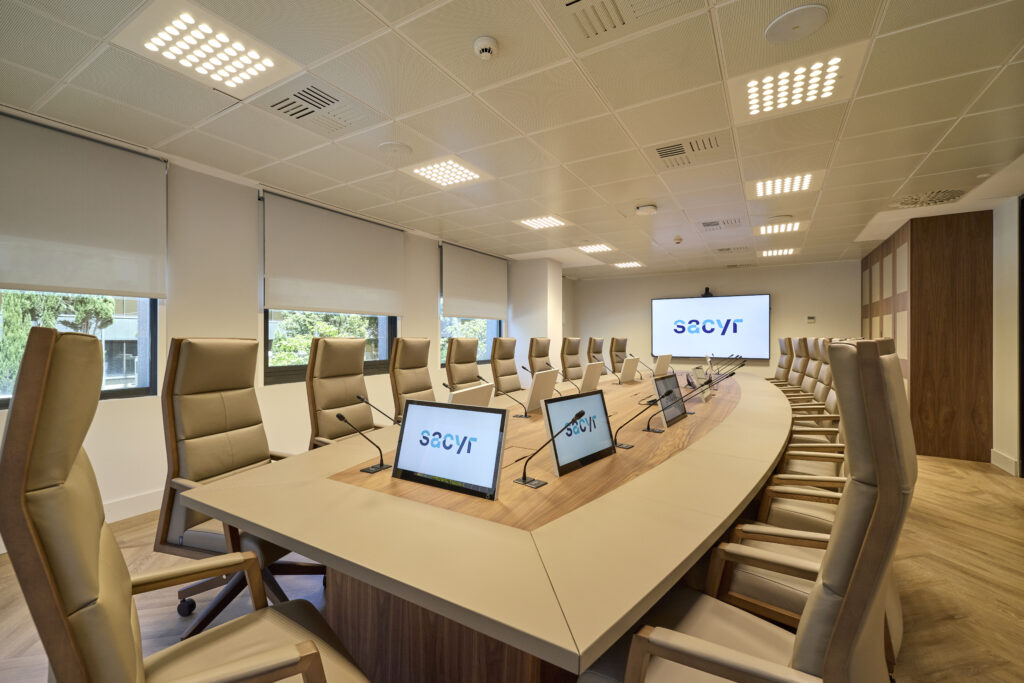
A discussion is more useful when participants can examine the information behind it.
Financial forecasts, project proposals and strategic scenarios need to be legible and accessible. If people struggle to read a distant screen or consult different versions of a document, the conversation can lose its focus.
Personal displays integrated into the boardroom table can bring shared content within comfortable viewing distance. Participants can examine details, question assumptions and compare options while following the same presentation.
Their positioning matters. Screen height, inclination and placement should allow people to move comfortably between reviewing information and looking towards their colleagues.
This is a practical application of a human-centred approach to architecture: considering how furniture and technology shape the experience of an activity. The boardroom needs to accommodate both close attention to evidence and awareness of the people discussing it.
Create space for focused attention
Important decisions deserve time and attention. A dedicated boardroom can help establish both, providing a setting where participants step away from everyday interruptions and concentrate on a shared purpose.
Viewed through a neuroarchitectural lens, the design brief extends beyond appearance. It asks how the room feels and functions during use: whether lighting creates glare, whether speech is easy to follow and whether the layout makes interaction comfortable.
Technology should support that focus. Controls should be straightforward, connections accessible and equipment discreetly integrated.
Retractable monitors offer a useful way to move between reviewing information and discussing it. Screens can be available when content is needed and lowered when the conversation takes priority, opening the view across the table.
That transition gives the meeting a clear rhythm: examine the evidence, discuss its implications and agree on the next step. An unobstructed view gives participants more opportunity to notice expressions, gestures and invitations to speak.
Make hybrid participation part of the design
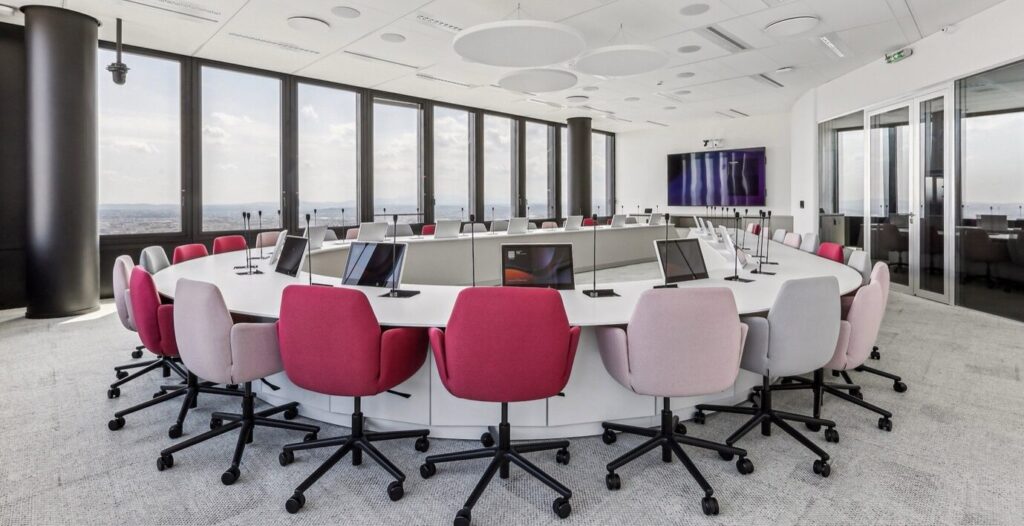
The right expertise may come from another office, another country or an external adviser.
A boardroom should enable those contributors to take part meaningfully. That requires clear audio, considered camera positioning and shared content that remote participants can follow.
Visual communication deserves particular care. Camera framing and lighting should make faces and gestures visible, while remote participants should remain easy for those in the room to see. Camera and display placement should also be considered together, recognising that looking at a person on screen does not always translate into apparent eye contact through the camera.
Meeting habits remain essential. A chair who actively invites remote colleagues into the discussion, checks understanding and allows time for responses helps make participation more balanced.
Access to the conversation should shape the room’s design.
Adapt the room to the decision
A strategy workshop, a financial review and a confidential leadership discussion place different demands on a space.
The boardroom should support these different meeting formats, including changes within a single session. Participants may need to study a detailed presentation, debate alternatives and then hold an open discussion.
Integrated, retractable technology helps create that flexibility. The same table can support digital presentations and face-to-face exchange, with equipment available as the meeting requires it.
The design objective is to make those transitions easy, keeping attention on the task and the people involved.
Design the boardroom around the conversation
A boardroom earns its place through the work it enables. Its value lies in helping people understand the evidence, hear different perspectives and reach a clear decision—with agreed responsibilities and next steps.
Neuroarchitecture encourages us to consider the room as part of that experience. Clear sightlines, comfortable surroundings and accessible technology can create more supportive conditions for discussion. Thoughtful facilitation helps turn those conditions into meaningful participation.
At Arthur Holm, we design technology to serve that human exchange. Our retractable displays and integrated audiovisual solutions bring information to the table while preserving the character of the space.
When people can see clearly, listen closely and contribute confidently, the boardroom becomes a valuable setting for better-informed decisions.
Discover how Arthur Holm can help you create a boardroom designed around people
and purposeful discussion.