
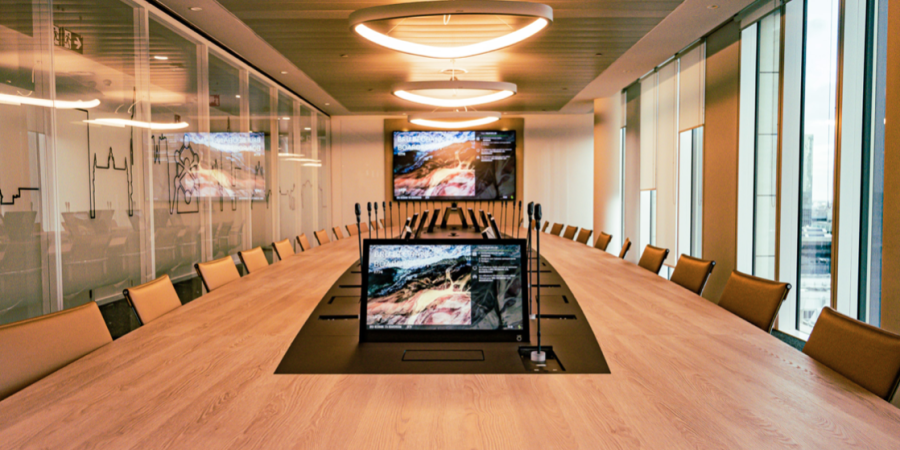
Arthur Holm’s Approach to Seamless AV Architecture
In contemporary high-end environments, technology is no longer an add-on but an integral part of the architectural vision. This is especially true in boardrooms, executive meeting spaces and institutional environments, where design quality, functionality and performance must coexist seamlessly.
Today, design integration goes beyond aesthetics. Insights from neuroarchitecture — the discipline that studies how built environments influence cognitive processes and behaviour — show that spatial clarity, visual balance and reduced sensory distraction significantly enhance concentration, collaboration and decision-making.
In high-level meetings where strategic decisions are made, the environment itself can either support or hinder cognitive performance. When technology is visually intrusive or poorly integrated, it creates unnecessary cognitive load. Conversely, when AV systems are seamlessly embedded into the architecture, the space promotes clarity, focus and productive dialogue.
Design integration therefore means that AV technology — including monitors, microphones, cameras, speakers and connectivity — becomes a natural extension of the architectural language. Rather than dominating the room, these elements align with the materials, geometry, colours and overall intent of the interior design.
At Arthur Holm, this philosophy defines our approach. We design and manufacture customized retractable monitors and integrated AV solutions that merge seamlessly with furniture and architectural elements. The objective is clear: to support communication, focus and decision-making while preserving architectural integrity.
Seamless Integration of Monitors and Microphones
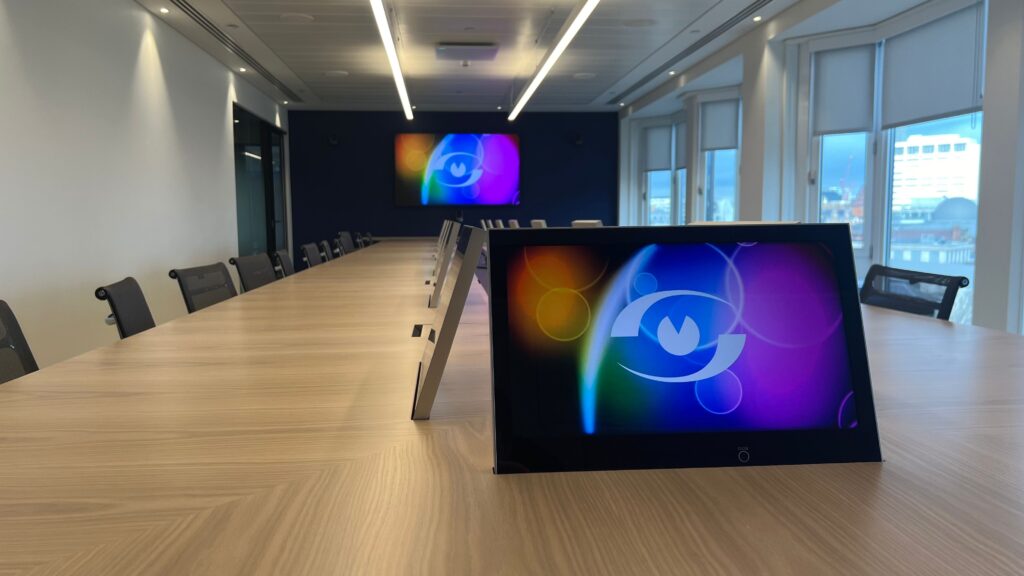
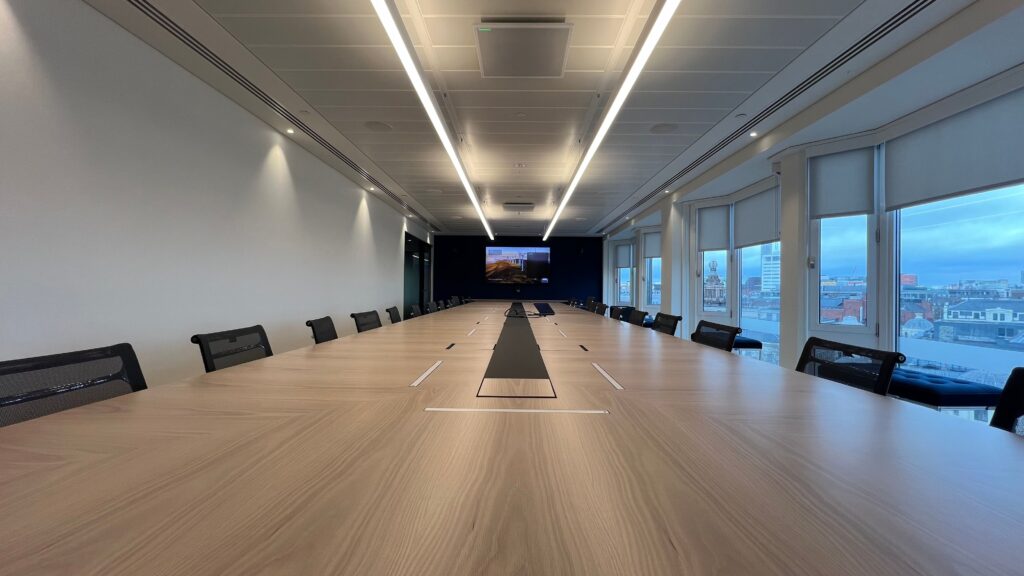
In a well-designed boardroom, technology should appear only when needed and disappear when not in use. This principle aligns with neuroarchitectural thinking: minimizing visual distractions helps participants remain engaged in the conversation and the decisions being made.
Arthur Holm’s retractable solutions follow this concept, offering elegant motorized functionality while maintaining a clean tabletop surface when the technology is not required.
When combined with DynamicTalk for gooseneck microphones and DynamicSpeaker for discreet audio distribution, the result is a unified communication environment designed specifically for modern meeting spaces.
For architects and interior designers, this approach provides several advantages:
- – Uninterrupted sightlines across the table
- – Clean and refined surfaces
- – Ergonomic positioning for participants
- – Full AV functionality without visual disruption
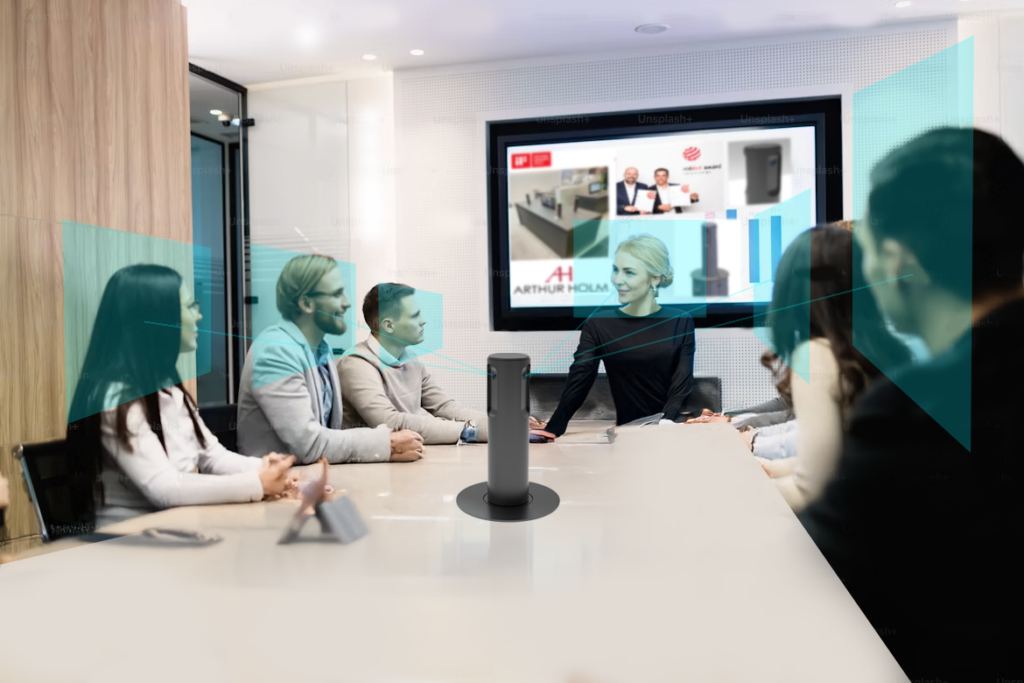
The DynamicCameraLift (DynamicCL) further enhances hybrid meeting environments by integrating motorized 360º cameras directly into the furniture structure.
Through thoughtful AV integration, technology supports communication and collaboration while remaining visually discreet.
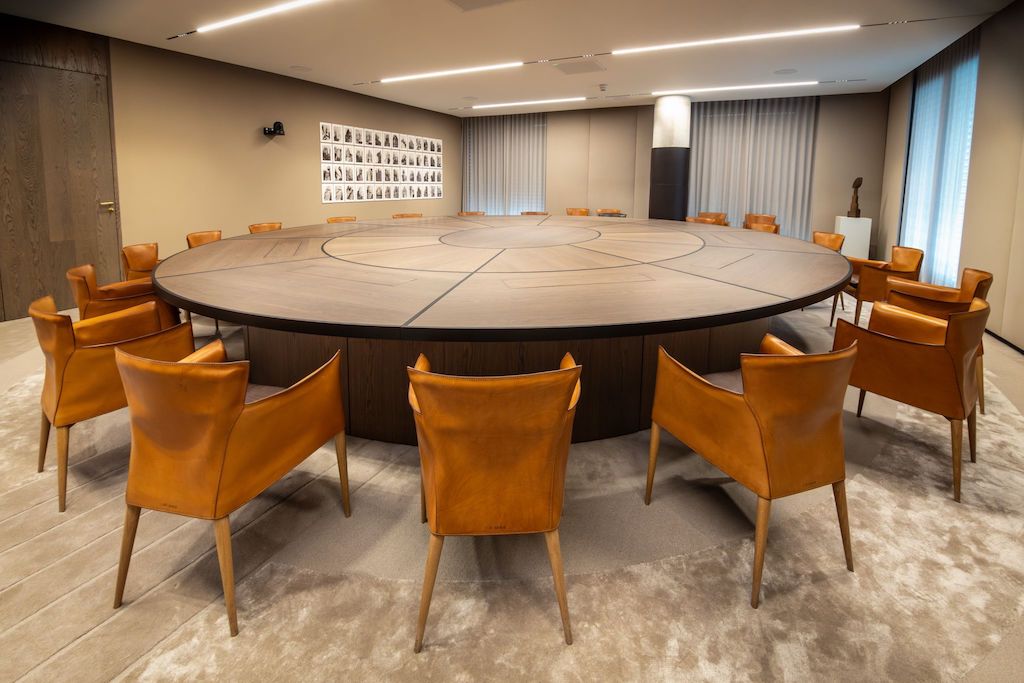
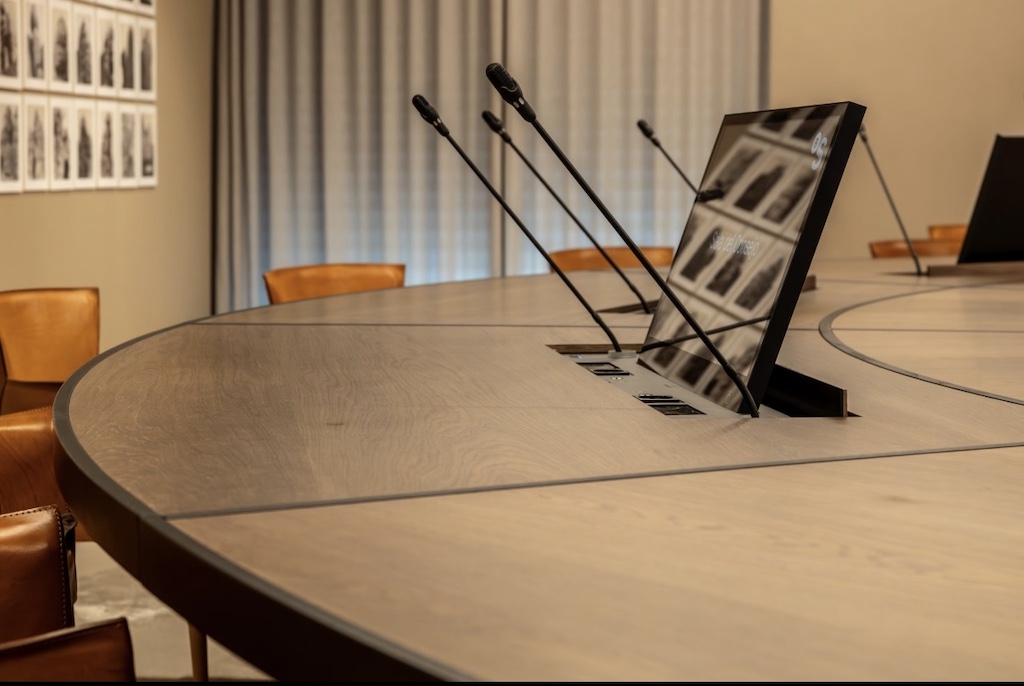
Minimalism, Cognitive Clarity and Invisible Technology
Minimalism plays a crucial role in contemporary boardroom design. In executive and institutional environments, reducing visual noise contributes not only to aesthetic quality but also to cognitive clarity.
Neuroarchitecture research demonstrates that simplified environments help the brain process information more efficiently, supporting focus and structured discussion. This is particularly relevant in spaces where complex decisions are made.
Invisible or seamlessly integrated AV technology therefore becomes essential. When monitors, microphones, speakers and cameras are embedded within the furniture, the space remains visually calm and balanced.
This approach offers several architectural and cognitive advantages:
- – Clean, uninterrupted design lines
- – Spatial continuity across the meeting table
- – Reduced visual distraction during discussions
- – A refined atmosphere aligned with premium materials
- – Environments that support concentration and strategic thinking
When AV systems are integrated seamlessly into the furniture and architecture, the room feels more open, balanced and purposeful. Attention remains focused on people, ideas and decisions, while the design integrity of the space is preserved.
In this way, technology enhances the boardroom experience while remaining visually discreet.
Materials, Customization and Visual Harmony
True design integration requires adaptability. Every boardroom is unique, and every project demands coherence between technology, furniture and architecture.
Customization allows AV systems to align with a wide variety of materials and finishes, including:
· Wood veneers and natural finishes
· Lacquered or matte surfaces
· Stone, leather or composite materials
· Corporate identity and brand aesthetics
Veneering solutions enable AV equipment to blend naturally with the meeting table design, ensuring that technology respects the selected material palette.
Whether the objective is complete invisibility or a subtle architectural presence, customization ensures visual harmony between technology and the surrounding environment.
For furniture manufacturers and fit-out companies, this flexibility allows AV solutions to become an integrated component of the furniture design rather than an external addition.
Designing Boardrooms that Support Strategic Thinking
A boardroom is far more than a meeting space. It represents leadership, identity and vision. It is also the place where some of the most important decisions of an organization are made.
When designing boardrooms with integrated technology, architects and designers should consider several key factors:
· Early integration of technology within the table structure
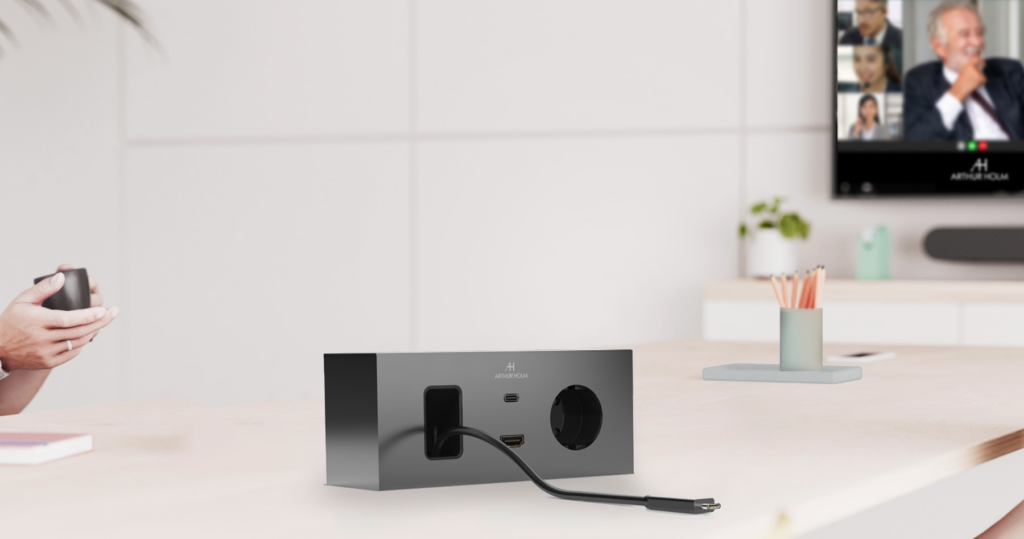
· Careful planning of cable management and technical infrastructure
· Coordination between furniture design and AV specifications
· User experience focused on intuitive and distraction-free operation
· Spatial clarity that supports concentration and dialogue
Early collaboration between architects, interior designers, furniture manufacturers and AV specialists is essential. When AV technology is considered from the conceptual design stage, it becomes part of the architectural language rather than a late addition.
For architects, interior designers, furniture manufacturers and fit-out specialists, integrated AV solutions make it possible to create boardrooms where technology and architecture function as a unified system.
The result is not simply a meeting room equipped with technology.
It is an environment designed to support communication, focus and confident decision-making — where technology becomes part of the architecture itself.